Monday, 31 October 2016

The Elusive Tamarillo.


Finally, after years of barren stumps & Leaf-less tree skeletons, i have one of my Tamarillo trees that has borne fruit! I have struggled to grow Tamarillos for many years now usually tossing them on the compost pile once they seemingly die & drop all their leaves. Well as it happens it seems you have to break through the other side after leaf drop and they will eventually come good again & bear fruit!
Albeit a very small Tamarillo fruit, it is a massive leap of confidence & i won't bin this year's trees after all. 


Tamarillos are native to the Andes in South America but can be grown in many subtropical regions around the world. Prior to 1967, the Tamarillo was known as the "tree tomato" in New Zealand, but a new name was chosen by the New Zealand Tree Tomato Promotions Council in order to distinguish it from the ordinary garden tomato and increase its exotic appeal. The choice is variously explained by similarity to the word "tomato", the Spanish word "amarillo", meaning yellow, and a variation on the Maori word "tama", for "son or boy". They are a popular tree grown in NZ home gardens and will often be seen in supermarkets during the season.
The plant is a fast-growing tree that grows up to 5 meters. Peak production is reached after 4 years, and the life expectancy is about 12 years. The tree usually forms a single upright trunk with lateral branches. The flowers and fruits hang from the lateral branches. The leaves are large, simple and perennial, and have a strong pungent smell. The flowers are pink-white, and form clusters of around 10 flowers. They produce 1 to 6 fruits per cluster. Plants can set fruit without cross-pollination, but the flowers are fragrant and attract insects. Cross-pollination seems to improve fruit set. The roots are shallow and not very pronounced, therefore the plant is not tolerant to drought stress, and can be damaged by strong winds.


The fruits are egg shaped and about 4-10cm long. Their colour varies from yellow and orange to red and almost purple. Sometimes they have dark, longitudinal stripes. Red fruits are more acidic, yellow and orange fruits are sweeter. The red and purple types of fruits are preferred even though they taste more acidic, their colour is preferred by consumers. The flesh has a firm texture and contains more and larger seeds than a common tomato. The fruits are very high in vitamins and iron and low in calories.
The flesh of the tamarillo is tangy and variably sweet, with a bold and complex flavor, and may be compared to kiwifruit, tomato, guava, or passion fruit. The fruit is eaten by scooping the flesh from a halved fruit. Some people in New Zealand cut the fruit in half, scoop out the pulpy flesh, sprinkle lightly sugared and add to cereal at breakfast. Yellow-fruited cultivars have a sweeter flavor, occasionally compared to mango or apricot. The red-fruited variety, which is much more widely cultivated, is more tart, and the savory aftertaste is far more pronounced. In New Zealand, Tamarillos fruit around October. The skin and the flesh near it have a bitter taste and are not usually eaten raw.


Monday, 10 October 2016

October in the Garden


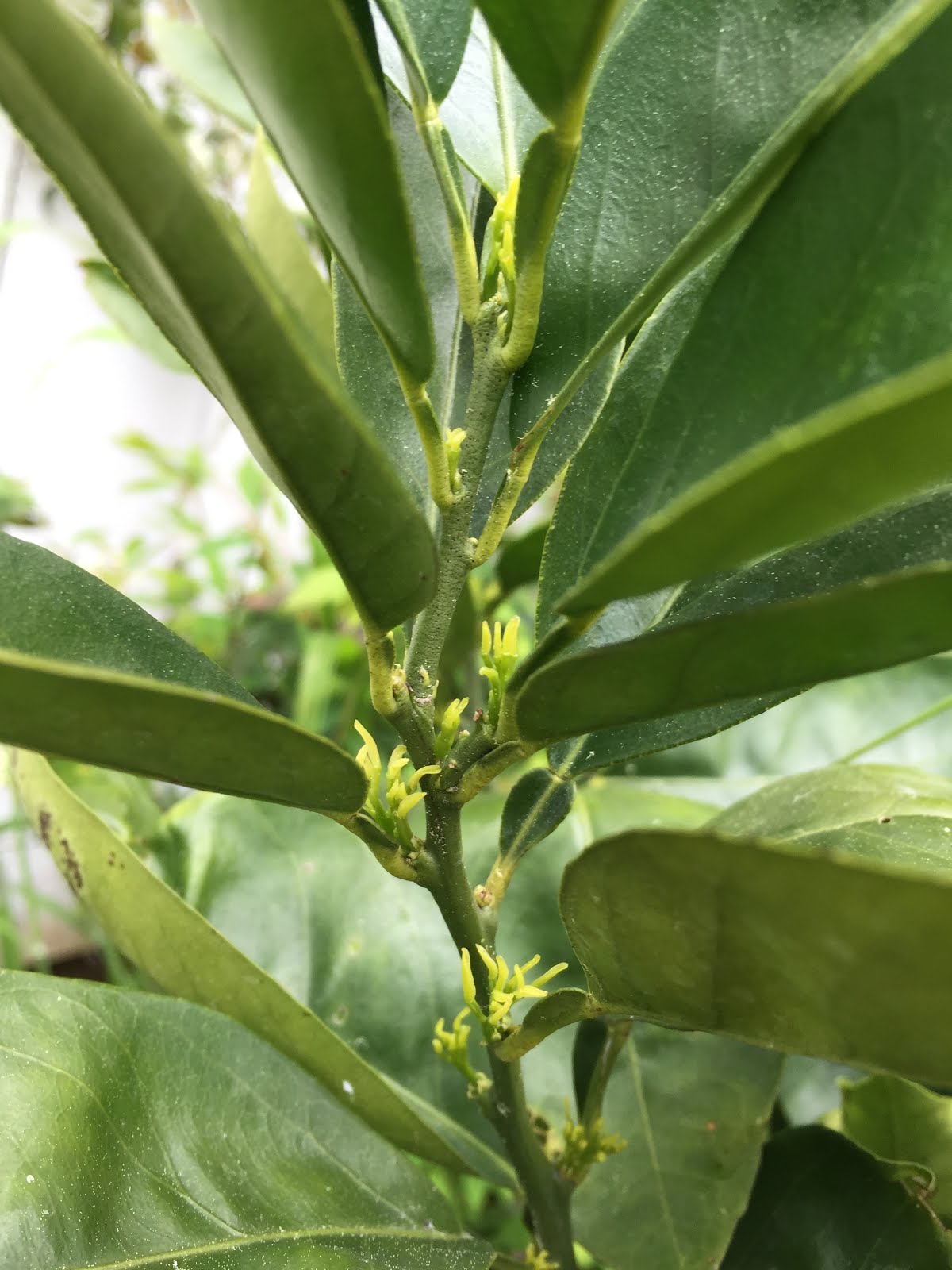
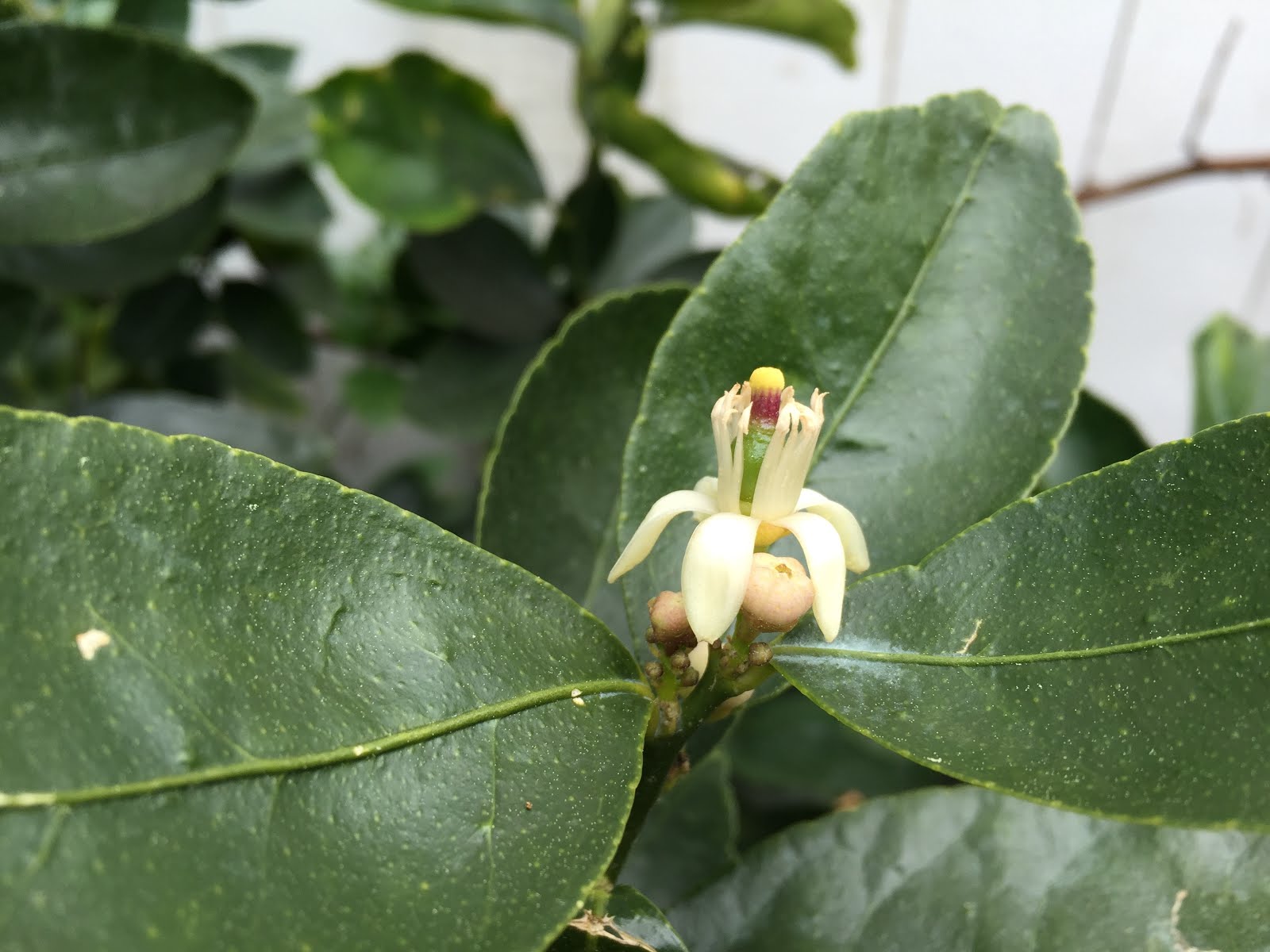
Well its mid-Spring here in Auckland and as far as fruit harvests it's a bit of a lull at the moment. On the other hand though, for the garden itself it's peak growth time. All my plants have started to wake up from their Winter hibernation and are pushing out new growth & flowering like mad in preparation of a big Summer. The Citrus especially are all pushing out new leaves and branches from last years buds and most are flowering like mad.
Here's a few photos from the garden this morning - hover over a photo for a description:)


Sunday, 25 September 2016

New Citrus: Key Lime.


Well i finally caved and brought a Key Lime tree today. I had tried to resist the urge as i already have way too many Lime trees already (6x Tahitian, 2x Australian Fingerlime, 1x Kusaie, 2x Kaffir). But i have been reading through the Gardenweb forums lately, and from what a lot of the members there say it is the best flavoured of the Limes compared to a Tahitian. Funnily enough, even with all my Lime trees, i have run out of Limes at the moment! (this is how i have justified the purchase). Must be time to ease up on the cocktails LOL.

Key Limes are smaller and seedier, with a higher acidity, a stronger aroma, and a thinner rind, than that of the Tahitian lime. It is valued for its unique flavor compared to other limes. 

The peel is thin, smooth and leathery, and greenish yellow to yellow at maturity. The pulp is greenish yellow, juicy, and highly acid with a distinctive aroma. They are quite seedy, which are highly polyembryonic (two or more plants identical to the mother plant may be produced from one seed). The name comes from its association with the Florida Keys, where it is best known as the flavouring ingredient in Key lime pie. (Here's my recipe for Key Lime Pie). It is also known as West Indian lime, bartender’s lime, or Mexican lime.

Key Lime is a small, bushy tree that will grow to around 5 metres when fully mature. Its trunk, which rarely grows straight, has many branches, which often originate quite far down on the trunk.  It has slender branches armed with short to medium length thorns.  The leaves are small (
3-9cm long) & ovate, resembling orange leaves (the scientific name Citrus Aurantiifolia refers to this resemblance to the leaves of the orange, Citrus Aurantium). The flowers are 2.5 cm in diameter, are yellowish white with a light purple tinge on the margins. Flowers and fruit appear throughout the year, but are most abundant from May to September in the Northern Hemisphere.


There are various ways to cultivate Key limes. This variety of citrus can be propagated from seed and will grow true to the parent. Alternatively budwood can be grafted onto rough lemon or sour orange rootstock. The method of cultivation greatly affects the size and timeliness of the harvest. Trees cultivated from seedlings take 4–8 years before producing a harvest. They attain their maximal yield at about 10 years of age. Trees produced from grafting or 
cuttings bear fruit much sooner, sometimes producing fruit (though not a serious harvest) a year after planting. It takes approximately 9 months from the blossom to the fruit. When the fruit have grown to harvesting size and begin to turn yellow they are then picked.

The Key lime tree does best in sunny sites, well-drained soils, good air circulation, and protection from cold wind.
Generally, Key lime trees need only limited pruning. Prune only to shape trees, to remove dead wood, to limit tree height & maximise the circulation of air.

Key Lime Pie


Monday, 12 September 2016

How to make Lemon Curd.

https://www.flickr.com/photos/frenchtart/5482657839/in/dateposted/

There's something about Lemon Curd that makes it so luscious, so delicious. Its a magical mixture of tart Lemonyness, sweet Sugar & creamy Egg yolks that makes it like the Chocolate of Citrus lovers, the ultimate for any Citrus Enthusiast. Made by gently cooking a mixture of fresh Lemon juice, Sugar, Butter & Eggs until thickened, its simplicity makes it even more attractive. Lemon Curd is divine on buttered toast, a simple and perfect way to appreciate the curd's cool, satiny texture. It also makes an easy and delicious filling for tarts, cakes & desserts. Its tart Lemon flavour makes it a great ingredient to balance the spiciness or the richness of other ingredients. Pair it with a Scone or slice of Toast and you'll appreciate how Lemon Curd can transform a simple, somewhat homely item into something wonderful.


Lemon Curd Recipe

250ml fresh Lemon juice, finely grated zest.

5 Whole Eggs

500gm Caster Sugar

100gm Butter, cut into small cubes.


  1. Put the Lemon zest and juice, the Sugar and the Butter into a heatproof mixing bowl. Sit the bowl over a pan of gently simmering water, making sure the water is not touching the bottom of the bowl. Stir the mixture every now and again until all of the butter has melted.
  2. Lightly whisk the Eggs and stir them into the Lemon mixture. Whisk until all of the ingredients are well combined, then leave to cook for 10-20mins. Be careful that it doesn’t curdle by making sure the temperature remains constant, and it doesn’t get too hot. Stir regularly until the mixture is creamy and thick enough to coat the back of a spoon.
  3. Remove the Lemon Curd from the heat and set aside to cool, stirring occasionally as it cools. Once cooled, spoon the Lemon Curd into sterilised jars and seal. Keep in the fridge until ready to use. It will keep (refrigerated) for 1 month.

Sunday, 4 September 2016

Spring Blossoms!


Well its officially Spring! Finally we have made it through the drudgery that is winter. Though the wind, rain & cold still didn't stop us achieving quite a lot of new plantings and enhancements throughout the garden. We put in a new deck for our daily Sundowner, a new Lavender farm of over 60 plants and many new fruit trees and natives. These were all planted in mid-winter with the hope they will be well rooted by the time the dry, parched Summer comes.
With Spring comes the sweet bounty of fruit blossoms and the blossoms of Citrus have to be the most intoxicating of them all. If the flower itself wasn't enough, the perfume they exude is the icing on the cake (especially Oranges).


I usually try to make sure my fruit trees are well fertilised in anticipation of the new growth & flowering that comes in Spring. Early August is a good time to make sure to spread a good Fruit Tree/Citrus fertiliser and even some extra Potash to aid flowering & fruiting. Then when things start to warm up in Spring the plants are all ready to push out their new growth & produce fruit. It is also a good time to spray Copper on the Stonefruits to prevent Peach Leaf Curl. 

Peach Blossom
Spring also heralds the start of the growing season especially for the Vege Patch so I'm also starting to plan what i will be growing this year in there. I will definitely be planting Tomatoes, as far as varieties go i love Cherry Tomatoes so i will plant one red, one yellow teardrop and one black striped Cherries. I also love the Mexican heirloom tomatoes such as Zapotec and other Oaxacan beefsteak varieties that are big, colourful with fluted ribbing and most importantly beautiful flavour. I will also plant three varieties of Courgette, Tomatillos, Jalepenos, Habaneros, Coriander, Basil, Lebanese Cucumbers and Corn. With these i will use them mostly for my mexican-inspired recipes which really shine during summer. For some of my recipes check out my book called 'Viva La Mexico' its available for free download as an e-book at www.blurb.com/ebooks/379548-viva-la-mexico

Tomatillo harvest.

My favourite Summer recipe though has to be my Caprese Salad. Nothing beats a late afternoon Sundowner and then munching this one down with a glass of Rose. Here's the recipe:

Caprese Salad.

Buffalo Mozzarella or Bocconcini.

Ripe Tomatoes.

Basil Leaves.

Extra-Virgin Olive Oil.

Maldon Sea Salt.

Pepper.

1. Slice Mozzarella & Tomatoes into thick, round slices.
2. Pluck whole leaves of Basil.
3. Layer Basil, Tomato & Mozzarella around in a circle.
4. Place a sprig of Basil in the centre.
5. Drizzle well with a good Olive Oil & sprinkle with Salt & Pepper


Thursday, 1 September 2016

Objects of Desire: Sumo/Dekopon


The Sumo is an exciting new hybrid of Citrus with an interesting story. Sadly it is yet to come to NZ in either fruit or tree form but i am very eager to try. From all accounts though, it seems to be a prized fruit at the high end of the Citrus market.

Its story begins in 1972 on Kyushu Island in Japan. A citrus grower there set out to develop a fruit which would combine the best of the easy-to-peel Japanese Satsuma with the big, juicy, sweet oranges from California. It is specifically a hybrid between a Kiyomi Tangor and a PonkanAlthough he saw promise in an obscure tangerine-orange hybrid, this new fruit was challenging to grow. Thankfully, the grower persevered. Over time, he developed a series of methods for growing, pruning and thinning his trees, which is different from all other citrus.
It took over 30 years but his hard work was rewarded when recently, this new variety became the most prized citrus fruit in Japan and Korea.  Following the Japanese tradition of offering the best fruit as a gift, one can find it in Tokyo gift shops, selling for up to US$10 for a single piece of fruit!  Now this legendary fruit, which is called Dekopon in Japan and Hallabong in Korea, is available in America.
Sumo is the biggest mandarin you'll ever seen. It has a distinctive shape with a prominent "top-knot" or large protruding bump on the top of the fruit. The peel is bright orange, bumpy and loose so it peels effortlessly, usually all in one piece! The delicate sections separate easily. Sumo has very little albedo (the white part of citrus), allowing the fruit to section easily with less of the white "netting" sticking to the fruit. It is avalible in stores in very limited supplies available from February-May in the U.S. It's seedless, juicy without being messy, and one of the sweetest of all citrus with very low acid.
At the beginning of the harvest, the fruit is very high in acidity. Consequently growers use a secret Japanese storage method to "cure" the fruit, to reduce its tartness. But with full maturity, after the three weeks curing in vinyl pouches, sugar rises and acidity drops naturally. Dekopons measured 13-18 degrees Brix (a measure of sugar content), numbers that mean powerhouse flavor. (Typically, other commercial citrus varieties such as navel oranges and clementines average 11 to 13 degrees.)
Hopefully this variety will become available soon in NZ. It has only just been released in the US in the past year under the name Shiranui after much cloak & dagger with budwood quarantine procedures from Japan. The Citrus nurserys here i've talked to haven't heard of it yet and have mentioned it is quite difficult to import new budwood into NZ. 


Photos courtesy of Susan Broman and Shizuoka Gourmet

Photo: Oli Studholme


Friday, 26 August 2016

New Citrus: Seville Orange & Lemonade.

This week i spent some time up in the tropical, far north of New Zealand. On the way home i drove through the Orange-growing mecca of NZ called Kerikeri. I thought it might be cool to stop in to an interesting nursery called Flying Dragon (named after the trifoliate orange dwarfing root stock). Most Citrus plants in garden centres in NZ will come from this nursery and they have many interesting varieties. They have several large greenhouses housing all their rootstock plants growing on and then subsequent budding of the various varieties onto rootstocks. Unfortunately they weren't keen on photos sorry:(
Anyhoo i picked up a couple of new Citrus friends to come home with me: a Seville Orange and a Lemonade (aka 'New Zealand' Lemonade for non-kiwis)


Seville orange is a widely known, particularly tart orange which is now grown throughout the Mediterranean region. It has a thick, dimpled skin, and is prized for making marmalade, being higher in pectin than the sweet orange, and therefore giving a better set and a higher yield. It is also used in baking, compotes and orange-flavored liqueurs. Once a year, oranges of this variety are collected from trees in Seville, Spain and shipped to Britain to be used in marmalade. However, the fruit is rarely consumed locally in Andalusia.


Although the Seville orange smells like a true orange, it is quite different. Its rough, thick and bumpy deep orange coloured peel clings tightly to its pale orange translucent flesh, making it hard to peel. The fruit is sour, tart, sometimes bitter and laden with seeds. It is medium size, round, with a slightly depressed apex. It has two primary attributes: the peel contains fragrant essential oils and its flesh, when ripe, is extremely juicy. The tree is attractive, large, vigorous, productive and cold tolerant. It has very few or no thorns. The most common usage for the Seville orange is for the production of marmalade where it can use its peel and juice to its advantage; any sour and bitter flavours can be developed and enriched into elements of depth. Other culinary uses can be to use the zest and juice in flavoured syrups, cocktails, vinaigrette or marinades. Pair with fennel, bitter greens, chicories, olives, other citrus, fresh herbs, aged cheeses, seafood, rice, and Spanish spices. Look here for a great recipe for a Seville Orange Curd Tart or here for Seville Orange Marmalade.
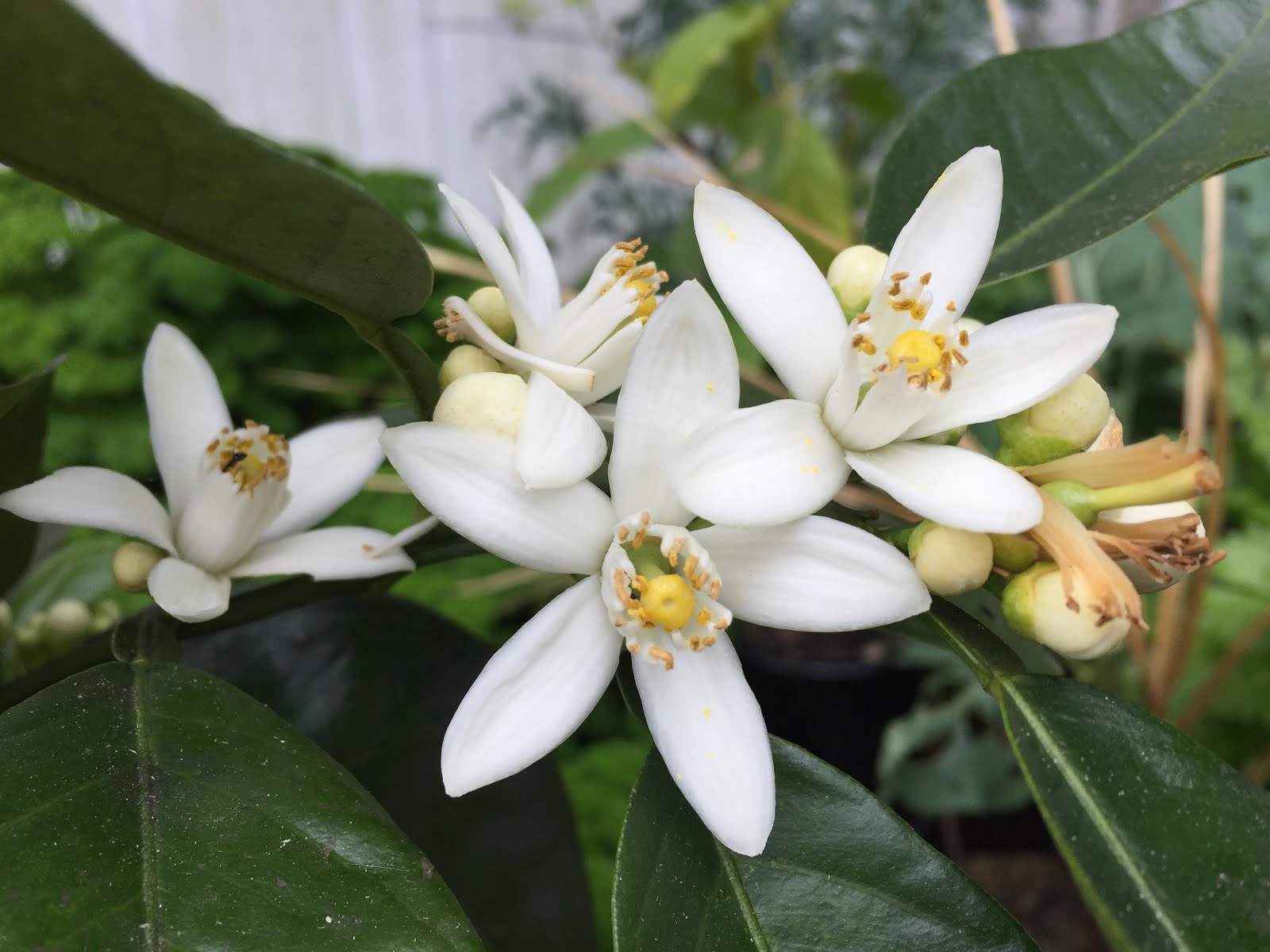
As you can see the Blossoms are large, plentiful and come with the most intoxicating Orange Blossom aroma which wafts throughout the garden, an added bonus to the fruit.
The Seville orange, is also been used in traditional Chinese medicine to treat nausea, indigestion and constipation. The crushed fruit and macerated leaves will lather when mixed with water and is used as a soap substitute in the Pacific Islands. The Seville orange peel, when dried and concentrated, contains a chemical similar to ephedra and has been used in many modern weight-loss products. 

Sour oranges are native to China. Trade routes brought them to Africa and the Mediterranean. This variety was brought directly to Spain by Arab conquerors in the 10th century from northern Africa via Morocco. Cultivation of sour orange varieties led to the Seville orange of Seville, Spain in the 12th Century, where it would accrue its name. The Seville orange was the only orange variety in Europe for the next 500 years. It was also one of the first citrus varieties brought to the New World where it was naturalized in the Caribbean, South, Central and North America. When sweet oranges were introduced to America, sour orange trees would begin to shift their role as edible fruit to rootstock. Cross pollination of the sour and sweet orange trees also proved to create bitter fruits in sweet orange varieties which forced farmers to reduce production of sour orange trees.


A Lemonade is a natural crossbread between an Orange and a Meyer Lemon, first cultivated in the 1980’s in Northland, New Zealand. It grows to about about 2.5-3 metres high. The fruit has the appearance and shape of a lemon though it is easily peeled, and easily segmented. It is unusually sweet and juicy and has a sweet effervescent flavour with a low acid content, tasting of lemonade. It is devoid of bitterness and can easily be eaten as a fresh fruit, or squeezed for drinks. The Lemonade tree often has small thorns and can bear a heavy crop each year. Fruit is ripe when light green in colour and is consumed fresh, juiced, with mixed drinks, or used to make marmalades with other citrus. It is quite popular as a backyard tree throughout NZ & Australia, with a only a few small commercial plantings.