
Here's my list of Limes planted in the garden.......
2x Key Lime
1x Kusaie


6x Tahitian
2x Australian Fingerlime2x Key Lime
1x Kusaie
2x Kaffir

International Margarita Day is officially observed annually on February 22nd. This is perfect for us in Auckland, NZ as Limes are just maturing into ripeness. Margys, as they are known in our household (or "Troygaritas"), are the most common tequila-based cocktail. It is a cocktail that consists of Tequila, Triple sec and fresh Lime juice. A key ingredient is the freshly squeezed lime juice. The most common Lime to use is the Tahitian (Persian) Lime. However, margaritas in Mexico are generally made with Mexican limes (Key limes). These are small, thin-skinned limes and have more tart flavour compared to Tahitian Limes. Margaritas can be made with Lemons, they have a much softer taste. But i recommend to keep it authentic and use fresh Lime juice only. To juice my Limes i use a Lime Juicer like so:
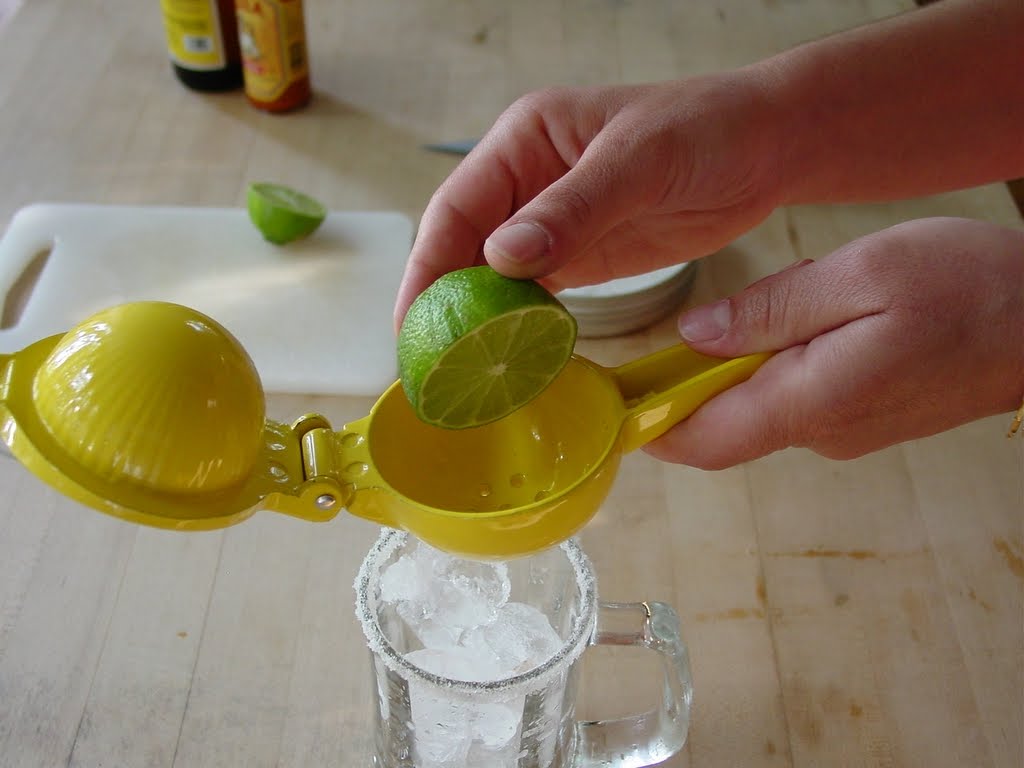
Manual juicing is often messy but this is as efficient as a machine juicer without making a mess. You simply slice the lime, face the flesh towards the holes, hold it over the measure, and give it a good squeeze. The mechanics of it make is simple to get enough pressure to juice a lime without having to go all Hulk on it. Then you just give it a quick rinse & dry off. It’s easy to use and easy to clean.
So here's a couple of my go-to recipes for a Margy. You can keep it Classic or funk it up with my Mescal Margarita or get really fruity and go for a Oaxacan Gold Pineapple Margy the choice is up to you!
Classic Margarita.
70ml Tequila.
40ml Cointreau.
30ml Fresh Lime juice.
Salt.
Agave Syrup or Caster Sugar (to taste).
Agave Syrup or Caster Sugar (to taste).
1. Rub the rim of glass with a Lime Wedge then dip the rim into a shallow plate of Salt.
2. Shake all ingredients with Ice.
3. Carefully pour into the glass with some Ice.
4. Garnish with a Lime wedge.
For the Classic i like to use a nice Anejo Tequila such as Patron or Herradura for a oaky aged smooth flavour or you can use Silver Tequila for a bright, clear flavour.
For the Classic i like to use a nice Anejo Tequila such as Patron or Herradura for a oaky aged smooth flavour or you can use Silver Tequila for a bright, clear flavour.

Mescal Margarita.


For more Margarita recipes check out my book called 'Viva La Mexico' its available for free download as an e-book at www.blurb.com/my/ebooks/639073-viva-la-mexico
70ml Mescal.
40ml Grand Marnier.
40ml Fresh Lime Juice.
10ml Agave Syrup.
Maldon Salt.
Lime Wedges.
*For a less smokey drink 35ml Tequila/ 35ml Mescal.
**You can Cointreau instead of Grand Marnier if you wish.
***For the rim you can make a blend of crushed Dried Chilies with the Salt.
1. Rub the rim of glass with a Lime Wedge then dip the rim into a shallow plate of Salt.
2. In a cocktail shaker add the Mescal, Grand Marnier, Lime Juice & Agave Syrup. Add a handful of Ice & Shake.
3. Carefully pour into the glass with some Ice.
4. Garnish with a Lime wedge.

Oaxacan Gold Margarita.
30ml Oaxacan Mezcal
.
15ml fresh Lime juice
.
75ml Grilled Pineapple-Vanilla Puree.
6 to 10 ice cubes.
Chilli Salt.
Roasted Pineapple-Vanilla Puree
1 Large ripe Pineapple, peeled & cut crosswise into 2cm thick pieces.
½ cup Sugar
½ teaspoon Vanilla Extract.
Roasted Pineapple-Vanilla Puree
1. Grill Pineapple until it is softened & caramelized. Cool.
2. In a blender, combine the grilled Pineapple with the Sugar, Vanilla & enough Water to bring the quantity of the total puree to 5 cups (about 2 cups water). Cover & pulse until the pineapple is roughly chopped, then blend on high until smooth & foamy. Strain into a storage container, cool & refrigerate until you're ready to use, up to 3 days.
3. Rub the rim of a glass with a Lime Wedge then dip the rim into a shallow plate of Chilli Salt.
4. In a cocktail shaker, combine the Mezcal, Lime juice, Grilled Pineapple-Vanilla Puree & Ice. Shake until frothy & cold.
5. Pour into the prepared glass with Ice.

For more Margarita recipes check out my book called 'Viva La Mexico' its available for free download as an e-book at www.blurb.com/my/ebooks/639073-viva-la-mexico


