Showing posts with label Lemons. Show all posts

Monday, 12 September 2016

How to make Lemon Curd.

https://www.flickr.com/photos/frenchtart/5482657839/in/dateposted/

There's something about Lemon Curd that makes it so luscious, so delicious. Its a magical mixture of tart Lemonyness, sweet Sugar & creamy Egg yolks that makes it like the Chocolate of Citrus lovers, the ultimate for any Citrus Enthusiast. Made by gently cooking a mixture of fresh Lemon juice, Sugar, Butter & Eggs until thickened, its simplicity makes it even more attractive. Lemon Curd is divine on buttered toast, a simple and perfect way to appreciate the curd's cool, satiny texture. It also makes an easy and delicious filling for tarts, cakes & desserts. Its tart Lemon flavour makes it a great ingredient to balance the spiciness or the richness of other ingredients. Pair it with a Scone or slice of Toast and you'll appreciate how Lemon Curd can transform a simple, somewhat homely item into something wonderful.


Lemon Curd Recipe

250ml fresh Lemon juice, finely grated zest.

5 Whole Eggs

500gm Caster Sugar

100gm Butter, cut into small cubes.


  1. Put the Lemon zest and juice, the Sugar and the Butter into a heatproof mixing bowl. Sit the bowl over a pan of gently simmering water, making sure the water is not touching the bottom of the bowl. Stir the mixture every now and again until all of the butter has melted.
  2. Lightly whisk the Eggs and stir them into the Lemon mixture. Whisk until all of the ingredients are well combined, then leave to cook for 10-20mins. Be careful that it doesn’t curdle by making sure the temperature remains constant, and it doesn’t get too hot. Stir regularly until the mixture is creamy and thick enough to coat the back of a spoon.
  3. Remove the Lemon Curd from the heat and set aside to cool, stirring occasionally as it cools. Once cooled, spoon the Lemon Curd into sterilised jars and seal. Keep in the fridge until ready to use. It will keep (refrigerated) for 1 month.

Friday, 26 August 2016

New Citrus: Seville Orange & Lemonade.

This week i spent some time up in the tropical, far north of New Zealand. On the way home i drove through the Orange-growing mecca of NZ called Kerikeri. I thought it might be cool to stop in to an interesting nursery called Flying Dragon (named after the trifoliate orange dwarfing root stock). Most Citrus plants in garden centres in NZ will come from this nursery and they have many interesting varieties. They have several large greenhouses housing all their rootstock plants growing on and then subsequent budding of the various varieties onto rootstocks. Unfortunately they weren't keen on photos sorry:(
Anyhoo i picked up a couple of new Citrus friends to come home with me: a Seville Orange and a Lemonade (aka 'New Zealand' Lemonade for non-kiwis)


Seville orange is a widely known, particularly tart orange which is now grown throughout the Mediterranean region. It has a thick, dimpled skin, and is prized for making marmalade, being higher in pectin than the sweet orange, and therefore giving a better set and a higher yield. It is also used in baking, compotes and orange-flavored liqueurs. Once a year, oranges of this variety are collected from trees in Seville, Spain and shipped to Britain to be used in marmalade. However, the fruit is rarely consumed locally in Andalusia.


Although the Seville orange smells like a true orange, it is quite different. Its rough, thick and bumpy deep orange coloured peel clings tightly to its pale orange translucent flesh, making it hard to peel. The fruit is sour, tart, sometimes bitter and laden with seeds. It is medium size, round, with a slightly depressed apex. It has two primary attributes: the peel contains fragrant essential oils and its flesh, when ripe, is extremely juicy. The tree is attractive, large, vigorous, productive and cold tolerant. It has very few or no thorns. The most common usage for the Seville orange is for the production of marmalade where it can use its peel and juice to its advantage; any sour and bitter flavours can be developed and enriched into elements of depth. Other culinary uses can be to use the zest and juice in flavoured syrups, cocktails, vinaigrette or marinades. Pair with fennel, bitter greens, chicories, olives, other citrus, fresh herbs, aged cheeses, seafood, rice, and Spanish spices. Look here for a great recipe for a Seville Orange Curd Tart or here for Seville Orange Marmalade.
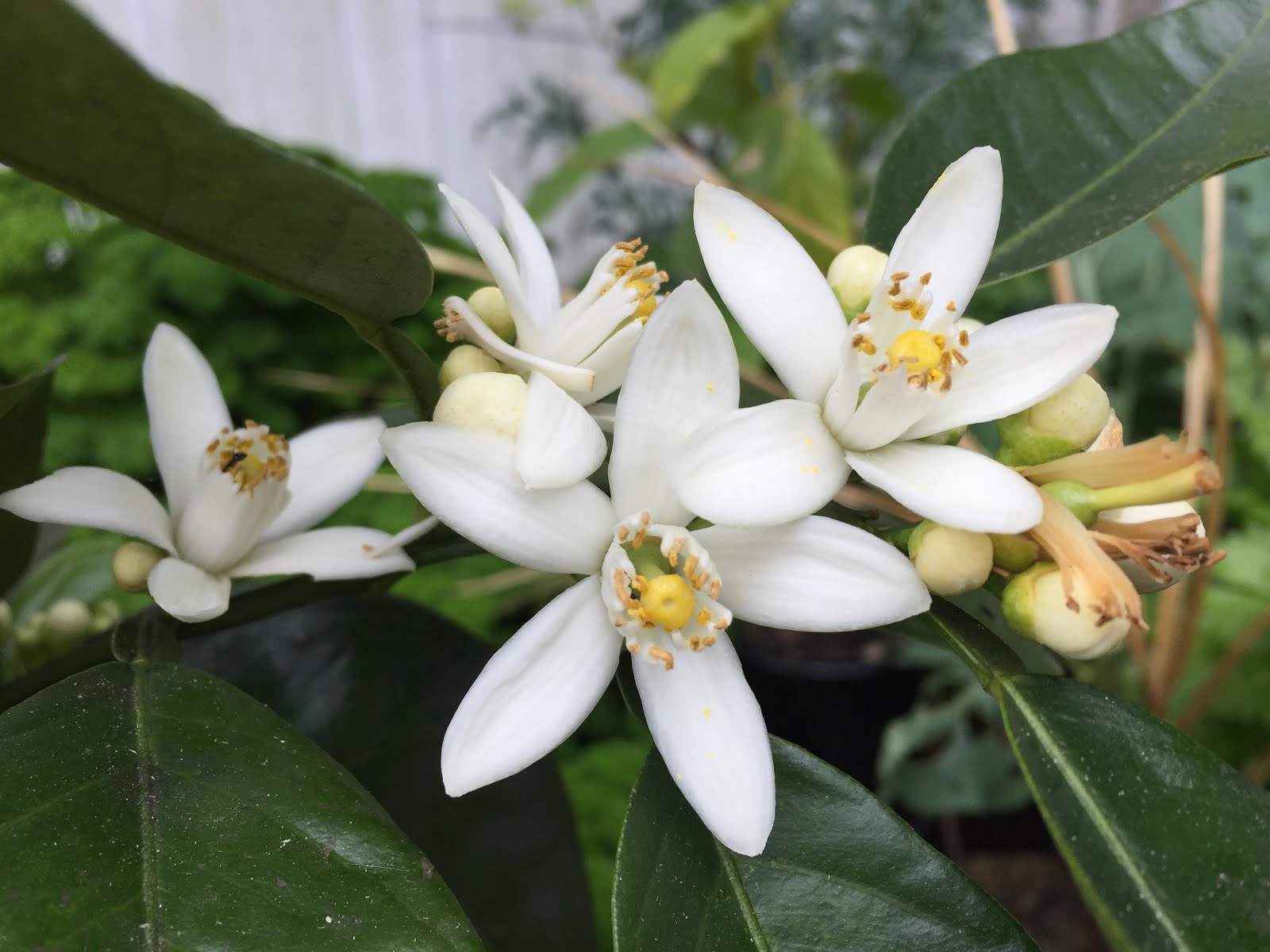
As you can see the Blossoms are large, plentiful and come with the most intoxicating Orange Blossom aroma which wafts throughout the garden, an added bonus to the fruit.
The Seville orange, is also been used in traditional Chinese medicine to treat nausea, indigestion and constipation. The crushed fruit and macerated leaves will lather when mixed with water and is used as a soap substitute in the Pacific Islands. The Seville orange peel, when dried and concentrated, contains a chemical similar to ephedra and has been used in many modern weight-loss products. 

Sour oranges are native to China. Trade routes brought them to Africa and the Mediterranean. This variety was brought directly to Spain by Arab conquerors in the 10th century from northern Africa via Morocco. Cultivation of sour orange varieties led to the Seville orange of Seville, Spain in the 12th Century, where it would accrue its name. The Seville orange was the only orange variety in Europe for the next 500 years. It was also one of the first citrus varieties brought to the New World where it was naturalized in the Caribbean, South, Central and North America. When sweet oranges were introduced to America, sour orange trees would begin to shift their role as edible fruit to rootstock. Cross pollination of the sour and sweet orange trees also proved to create bitter fruits in sweet orange varieties which forced farmers to reduce production of sour orange trees.


A Lemonade is a natural crossbread between an Orange and a Meyer Lemon, first cultivated in the 1980’s in Northland, New Zealand. It grows to about about 2.5-3 metres high. The fruit has the appearance and shape of a lemon though it is easily peeled, and easily segmented. It is unusually sweet and juicy and has a sweet effervescent flavour with a low acid content, tasting of lemonade. It is devoid of bitterness and can easily be eaten as a fresh fruit, or squeezed for drinks. The Lemonade tree often has small thorns and can bear a heavy crop each year. Fruit is ripe when light green in colour and is consumed fresh, juiced, with mixed drinks, or used to make marmalades with other citrus. It is quite popular as a backyard tree throughout NZ & Australia, with a only a few small commercial plantings.


Friday, 3 June 2016

Meyer Lemons vs. Regular Lemons


In the depths of winter when there's nothing much happening in the garden except mud & rain, there's a bright yellow beacon of flavour. Lemons, just when you need that vitamin C hit. There are many different varieties such as Eureka, Lisbon, Ponderosa, Yen Ben, Lemonade, Villa Franca. But it is Meyer Lemons that are NZ's most popular. But just what is it that makes these lemons so special? And are they really that different from regular lemons?
If you've ever wondered about the difference between Meyer lemons and regular lemons, here's what you need to know.
Regular Lemons
When we talk about regular or common lemons, we're usually referring to Eureka or Lisbon lemons. These are the two most common lemon varieties found in the produce section.
  • Appearance - Compared to their Meyer counterparts, regular lemons are noticeably larger in size and pointy-er, with thick, textured, bright, sunny skin, and medium yellow pulp.
  • Taste - Regular lemons are highly acidic. They're slightly sweet, but known for a tang that will make your mouth pucker.
  • Availability - While there are certain times of year that trees will bear more fruit, regular lemons know no season. You'll find them readily available in the produce section all year long.
Meyer Lemons

Meyer lemons were first introduced to the U.S. from China in the early 20th century by Frank Meyer, from whom they also got their name. This sweet(ish) winter citrus is thought to be a cross between a regular lemon and a mandarin orange. And that's what really sets it apart.
  • Appearance - Meyer lemons are smaller and more round than regular lemons, with smoother, thin, deep yellow to orange skin, and dark yellow pulp. The skin is more fragile to tears also. The differences are very distinct, especially when you see both varieties side by side.
  • Taste - While they're moderately acidic, Meyer lemons don't have the same tang as regular lemons. Instead, they're much sweeter. Their rinds also have a more complex scent than regular lemons — a spicy bergamot fragrance that tastes and smells more herbacious.
  • Availability - While regular lemons are readily available all year long, Meyer lemons are more seasonal in the shops. At home on an established tree though, you will seldom be without a lemon as they are prolific croppers. They are also more tolerant of cold than other lemons.

    Bearing this in mind i have both inground at home. A Eureka & a Meyer Lemon. The Meyer i have enjoyed many Lemons so far but the Eureka is just fruiting the first time this Winter.