Showing posts with label Lime. Show all posts

Saturday, 1 April 2017

Whiskey Sours : A Classic Citrus Recipe.


Whiskey Sours, they ain't fancy, but that's a big part of its appeal. Because at the end of a long day you don't always feel like challenging your palate, or even thinking very much. You just want a nice, tasty beverage thats easy to drink and helps you dissolve all the stress of the world away and start relaxing. Time for a Whiskey Sour - the comfortable T-shirt of drinks.


The true sour is a study in simplicity - Whiskey, Sugar, Citrus. Lemon is most common for the latter, but juice with any kind of noticeable acidity will work well (i prefer Lime juice). Traditional sours usually call for an egg white, an ingredient that adds a light, frothy, textural element to the cocktail.
If you want to jazz it up a bit, you can play around with the variety of Whiskey. I have made a couple of Whiskey Sours with Laphroaig, a heavily peated single malt from Islay which was pretty sublime. 

Whiskey Sour

60ml Whiskey
45ml Simple Syrup (1:1 ratio sugar:water)
30ml Lemon juice
1 Egg White

1. Combine ingredients in a shaker and dry shake until well combined, at least 10 seconds.
2. Add ice to your shaker and shake again as normal.
3. Strain into a chilled cocktail glass.


Wednesday, 22 February 2017

International Margarita Day


Happy International Margarita Day! Margaritas have to be my favourite cocktail. So much so that i have 9 Lime Trees planted in anticipation of unlimited fresh Limes always on hand. And at $30- a kilo i'm going to be rich! Haha! 

Here's my list of Limes planted in the garden.......
6x Tahitian
2x Australian Fingerlime
2x Key Lime
1x Kusaie

2x Kaffir


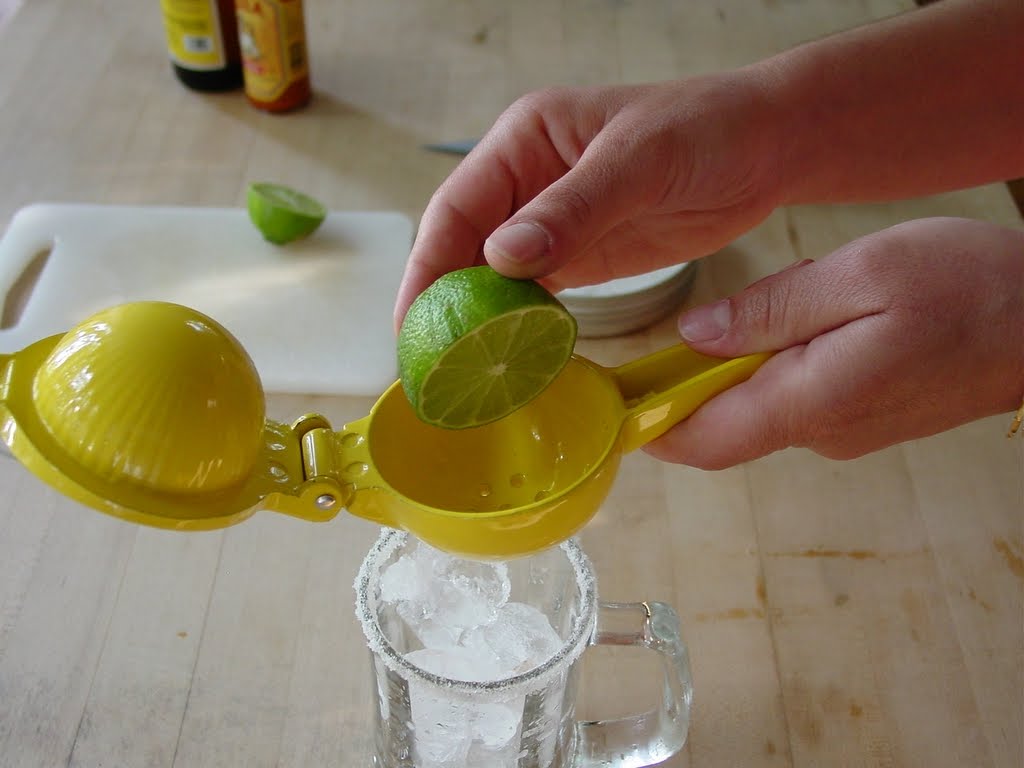
International Margarita Day is officially observed annually on February 22nd. This is perfect for us in Auckland, NZ as Limes are just maturing into ripeness. Margys, as they are known in our household (or "Troygaritas"), are the most common tequila-based cocktail. It is a cocktail that consists of Tequila, Triple sec and fresh Lime juice. A key ingredient is the freshly squeezed lime juice. The most common Lime to use is the Tahitian (Persian) Lime. However, margaritas in Mexico are generally made with Mexican limes (Key limes). These are small, thin-skinned limes and have more tart flavour compared to Tahitian Limes. Margaritas can be made with Lemons, they have a much softer taste. But i recommend to keep it authentic and use fresh Lime juice only. To juice my Limes i use a Lime Juicer like so:


Manual juicing is often messy but this is as efficient as a machine juicer without making a mess. You simply slice the lime, face the flesh towards the holes, hold it over the measure, and give it a good squeeze. The mechanics of it make is simple to get enough pressure to juice a lime without having to go all Hulk on it. Then you just give it a quick rinse & dry off. It’s easy to use and easy to clean.

So here's a couple of my go-to recipes for a Margy. You can keep it Classic or funk it up with my Mescal Margarita or get really fruity and go for a Oaxacan Gold Pineapple Margy the choice is up to you! 

Classic Margarita.

70ml Tequila.
40ml Cointreau.
30ml Fresh Lime juice.
Salt.
Agave Syrup or Caster Sugar (to taste).

1. Rub the rim of glass with a Lime Wedge then dip the rim into a shallow plate of Salt.
2. Shake all ingredients with Ice.
3. Carefully pour into the glass with some Ice.
4. Garnish with a Lime wedge.

For the Classic i like to use a nice Anejo Tequila such as Patron or Herradura for a oaky aged smooth flavour or you can use Silver Tequila for a bright, clear flavour.


Mescal Margarita.

 70ml Mescal.
40ml Grand Marnier.
40ml Fresh Lime Juice.
10ml Agave Syrup.
Maldon Salt.
Lime Wedges.
*For a less smokey drink 35ml Tequila/ 35ml Mescal.
**You can Cointreau instead of Grand Marnier if you wish.
***For the rim you can make a blend of crushed Dried Chilies with the Salt.

1. Rub the rim of glass with a Lime Wedge then dip the rim into a shallow plate of Salt.
2. In a cocktail shaker add the Mescal, Grand Marnier, Lime Juice & Agave Syrup. Add a handful of Ice & Shake.
3. Carefully pour into the glass with some Ice.
4. Garnish with a Lime wedge.


Oaxacan Gold Margarita.


30ml Oaxacan Mezcal
.
15ml fresh Lime juice
.
75ml Grilled Pineapple-Vanilla Puree.

6 to 10  ice cubes.
Chilli Salt.
Roasted Pineapple-Vanilla Puree


1 Large ripe Pineapple, peeled & cut crosswise into 2cm thick pieces.

½ cup Sugar

½ teaspoon Vanilla Extract.

Roasted Pineapple-Vanilla Puree

1. Grill Pineapple until it is softened & caramelized. Cool.
2. In a blender, combine the grilled Pineapple with the Sugar, Vanilla & enough Water to bring the quantity of the total puree to 5 cups (about 2 cups water). Cover & pulse until the pineapple is roughly chopped, then blend on high until smooth & foamy.  Strain into a storage container, cool & refrigerate until you're ready to use, up to 3 days.

3. Rub the rim of a glass with a Lime Wedge then dip the rim into a shallow plate of Chilli Salt.
4. In a cocktail shaker, combine the Mezcal, Lime juice, Grilled Pineapple-Vanilla Puree & Ice. Shake until frothy & cold. 
5. Pour into the prepared glass with Ice.


For more Margarita recipes check out my book called 'Viva La Mexico' its available for free download as an e-book at www.blurb.com/my/ebooks/639073-viva-la-mexico


Tuesday, 15 November 2016

The Citrus Hedge


I thought i'd share with you guys one area of my garden i call "The Citrus Hedge".
I planted most of it about 3 years ago and it seems this year it has really grown to its full potential. It runs along the southern edge of my section and was initially planted to screen off the neighbours for privacy but the main purpose was a space to practice intensive backyard orchard culture for delicious fruit! I first came across the concept of Backyard Orchard Culture online at Dave Wilson Nursery. (See Below). 


Here's what i have planted, just in this hedge area:

Feijoa Apollo
Eureka Lemon
Tarrocco Blood Orange
Tahitian Lime
Scarlett Burgess Mandarin
Variegated Calamondin
Tahitian Lime
Australian Finger Lime
Buddha's Hand
Cara Cara Orange
Invictus Gooseberry
Moro Blood Orange
Grapes : Albany Black & Niagra

Also planted down the side of house i have:

Peach Golden Queen
Apple Pacific Rose
Nectarine 
Peach Pixzee

They all seem to be growing well together the only thing is that some of the trees are more vigorous than others, so need pruning to control them so they don't invade the other tree's space. I have to be careful in the timing of this however as in NZ we have a nasty bug called Lemon Tree Borer that, if its around, will smell the freshly cut wounds and lay its eggs which in turn will bore destructively through the tree's branches. I also prune to keep the trees from taking over the whole space down the side of the house and to allow for walking down the area.


What is Backyard Orchard Culture? Here's the low down in a nutshell......

The objective of Backyard Orchard Culture is a prolonged harvest of tree-ripe fruit from a small space in the yard. This is accomplished by planting an assortment of fruit trees close together and keeping them small by summer pruning.
Backyard Orchard Culture Is Not Commercial Orchard Culture.
For years, most of the information about growing fruit came from commercial orchard culture: methods that promoted maximum size for maximum yield but required 12-foot ladders for pruning, thinning and picking, and 400 to 600 square feet of land per tree. Tree spacing had to allow for tractors. Most people today do not need nor expect commercial results from their backyard fruit trees. A commercial grower would never consider using his methods on a 90 ft. x 100 ft. parcel, so why should a homeowner?
Backyard Orchard Culture Is High Density Planting And Successive Ripening.
The length of the fruit season is maximized by planting several (or many) fruit varieties with different ripening times. Because of the limited space available to most homeowners, this means using one or more of the techniques for close-planting and training fruit trees; two, three or four trees in one hole, espalier, and hedgerow are the most common of these techniques. Four trees instead of one means ten to twelve weeks of fruit instead of only two or three. Close-planting offers the additional advantage of restricting a tree's vigor. A tree won't grow as large when there are competing trees close by. Close-planting works best when rootstocks of similar vigor are planted together. In many climates, planting more varieties can also mean better cross-pollination of pears, apples, plums and cherries, which means more consistent production.
Backyard Orchard Culture Means Accepting The Responsibility For Tree Size.
Small trees yield crops of manageable size and are much easier to spray, thin, prune, net and harvest than large trees. If trees are kept small, it is possible to plant a greater number of trees in a given space, affording the opportunity for more kinds of fruit and a longer fruit season. Pruning is the only way to keep most fruit trees under twelve feet tall. The most practical method of pruning for size control is Summer Pruning. There are several reasons why summer pruning is the easiest way to keep fruit trees small. Reducing the canopy by pruning in summer reduces photosynthesis (food manufacture), thereby reducing the capacity for new growth. Summer pruning also reduces the total amount of food materials and energy available to be stored in the root system in late summer and fall. This controls vigor the following spring, since spring growth is supported primarily by stored foods and energy. And, for many people, pruning is more enjoyable in nice weather than in winter, hence more likely to get done.


Sunday, 25 September 2016

New Citrus: Key Lime.


Well i finally caved and brought a Key Lime tree today. I had tried to resist the urge as i already have way too many Lime trees already (6x Tahitian, 2x Australian Fingerlime, 1x Kusaie, 2x Kaffir). But i have been reading through the Gardenweb forums lately, and from what a lot of the members there say it is the best flavoured of the Limes compared to a Tahitian. Funnily enough, even with all my Lime trees, i have run out of Limes at the moment! (this is how i have justified the purchase). Must be time to ease up on the cocktails LOL.

Key Limes are smaller and seedier, with a higher acidity, a stronger aroma, and a thinner rind, than that of the Tahitian lime. It is valued for its unique flavor compared to other limes. 

The peel is thin, smooth and leathery, and greenish yellow to yellow at maturity. The pulp is greenish yellow, juicy, and highly acid with a distinctive aroma. They are quite seedy, which are highly polyembryonic (two or more plants identical to the mother plant may be produced from one seed). The name comes from its association with the Florida Keys, where it is best known as the flavouring ingredient in Key lime pie. (Here's my recipe for Key Lime Pie). It is also known as West Indian lime, bartender’s lime, or Mexican lime.

Key Lime is a small, bushy tree that will grow to around 5 metres when fully mature. Its trunk, which rarely grows straight, has many branches, which often originate quite far down on the trunk.  It has slender branches armed with short to medium length thorns.  The leaves are small (
3-9cm long) & ovate, resembling orange leaves (the scientific name Citrus Aurantiifolia refers to this resemblance to the leaves of the orange, Citrus Aurantium). The flowers are 2.5 cm in diameter, are yellowish white with a light purple tinge on the margins. Flowers and fruit appear throughout the year, but are most abundant from May to September in the Northern Hemisphere.


There are various ways to cultivate Key limes. This variety of citrus can be propagated from seed and will grow true to the parent. Alternatively budwood can be grafted onto rough lemon or sour orange rootstock. The method of cultivation greatly affects the size and timeliness of the harvest. Trees cultivated from seedlings take 4–8 years before producing a harvest. They attain their maximal yield at about 10 years of age. Trees produced from grafting or 
cuttings bear fruit much sooner, sometimes producing fruit (though not a serious harvest) a year after planting. It takes approximately 9 months from the blossom to the fruit. When the fruit have grown to harvesting size and begin to turn yellow they are then picked.

The Key lime tree does best in sunny sites, well-drained soils, good air circulation, and protection from cold wind.
Generally, Key lime trees need only limited pruning. Prune only to shape trees, to remove dead wood, to limit tree height & maximise the circulation of air.

Key Lime Pie


Wednesday, 22 June 2016

Avocado - Avo-geddon

As many Aucklanders may be aware we are currently in the midst of Avogeddon. Where for some it seems like the end of the world has arrived where they can't enjoy their usual Avocado & Vegemite on Vogel's toast without shelling out up to $9 each for an Avo! Avocados have become the Uber trendy essential ingredient of the minute with the Active-wearing, Almond Mylk Latte, Green Smoothie sipping types. And it's this popularity that is driving prices up and creating scarcity. This is compounded also by a lot of our NZ Avos going directly overseas as exports, further creating scarcity back here in NZ. We are only just now in my cafe finding relief with new season Avos trickling in but usually Haas won't officially mature until July.
One of the most longed-for fruit trees by home gardeners is an Avocado. Being a native of Central America, Avocado culture is very ancient and was a staple diet for many cultures. The fruit is great in so many dishes including one of my favourites: Guacamole (recipe below). Unsurprisingly, given their Central American ancestry, avocado trees only thrive in warm locations. A light frost will burn any tender growth, and anything cooler than -3°C will kill a young tree. The best growing areas in NZ are Northland, Auckland, Gisborne, Hawke's Bay & Bay of Plenty where the majority of NZ Avo farms are in Katikati. 

At home i have one grafted Haas Avocado tree planted inground and another two that grew out of the compost randomly that are in pots. My thoughts are i'll only have the one inground as they grow in to quite large trees eventually and can use the potted plants as pollinators perhaps.


GROWING GUIDE
Below ground, the roots are very sensitive. The deep-growing tap root (a long slender root, similar to a big carrot) loathes heavy, clay and wet soil. The roots are susceptible to the fungal disease phytophthora, which thrives in difficult dirt. Avocado trees need excellent drainage, which means free-draining soil or, if unavailable, planting into a raised bed.
Site selection is very important to provide a warm, sheltered position for your valuable avocado tree. As well as the soil requirements, the site should be protected from wind and be warm and sunny. 
The best time to plant avocado trees is in late spring when the soil temperature is warming, which also reduces the likelihood of wet feet. This is also the main time of year that most avocado trees arrive at garden centres, probably to ensure the greatest chance of success when planting. Take care when lifting your new avocado tree from the garden centre or nursery. You should pick up the bag, not using the trunk as a handle.
VARIETIES
Around the world, the most popular variety for commercial growers and in home gardens is
the pebbly-skinned 'Hass'. With its long harvest season, excellent flavour and good flesh-to-seed ratio, 'Hass' has dominated production since it was spotted as a seedling in a Californian orchard in the 1930s. Hass is still considered the best option for the home gardener, usually supplying fruit from July until the following February or March. If you have room for two trees though,
'Reed' (ripening from February to May) has fantastic quality fruit with delicious, creamy flesh.
This is a green skin fruit with a hard shell-type skin, so it can a bit tricky to know when it's ripe. With a thicker skin than 'Hass', the flesh will only give very slightly when gently pressed. 'Fuerte' is another good variety, which has large fruit with a nutty flavoured flesh, ripening from August to October. 
PROPAGATION
Avocado seedlings are one of the easiest seeds to germinate. I think everyone has tried the avocado stone, toothpicks, cup and windowsill technique. Unfortunately, though, these seedlings can take up to 10 years to fruit, and the resulting avocados are likely to be of poor quality & not the same as the original fruit that the seed came from. The seedlings can be raised, however, until the stem is around pencil thickness, then grafted with a selected variety, such as 'Hass' or 'Reed' if you have such skills. Or else grafted Avocados are available at the Garden Centre but these are one of the most expensive fruit trees you'll see.
BLOSSOM & HARVESTING
Avocado trees have an unusual flowering system, in that the flower has both female and male organs. The female opens first for a couple of hours, closes, then the male opens for two or three hours, then the flower closes.
Avocado varieties are split into A and B types. In the A type ('Hass' and 'Reed'), the female opens on the morning of the first day and the male opens on the afternoon of the second day. In the B type (like 'Fuerte'), the female opens on the afternoon of the first day, and the male on the morning of the second day. Temperatures during this process are critical – dropping below 21°C  will make the flower opening more erratic.
Avocado trees have a prolific flowering period, with large clusters of blooms. Bees and other insects move the pollen between flowers. Flowers that are successfully pollinated form fruit. In commercial avocado orchards, pollinator varieties are planted, but in a home garden situation, usually one tree is sufficiently self-fertile.
Once fruit has set it takes up to a year for the fruitlets to mature – one of the longest times from flowering to fruiting in the orchard. The fruit will be mature, but interestingly, won't actually ripen until harvested.  They should be clipped from the tree using secateurs, to avoid damaging the skin and keep the stem "button" in place. 
TREE CARE
Once established, avocado trees require very little care: simply pruning to the desired size and shape. Bear in mind that avocado trees produce fruit on new growth, so clipping around the periphery of the tree will lower yield (although that trimming may be necessary to control size). Most Avo orchards i see will prune out the centre of the tree to let in as much light as possible into the canopy and to keep it at a manageable size.


Guacamole Recipe


3 Avocados.
1/2 Red Onion.
Chilies - Jalapenos or Hot Sauce.
1 Tomato.
1 or 2 Limes (or Lemon).
1 bunch Coriander.
Salt & Pepper.

1. Peel & roughly mash Avocados
2. Finely dice the Red Onion then rinse under water in a sieve.
3. Core & Dice the Tomatoes.
4. Juice the Lime
5. Finely chop the coriander.
6. Finely chop the chilies add to taste.
6. Add all the ingredients into a bowl & stir.
7. Season well with Salt & Pepper.
8. Garnish with extra Coriander & serve with Corn Chips.

For an added authentic flavour add in 4 large roasted Tomatillos. If you haven't tried Tomatillos i highly recommend looking into them for your mexican recipes. For more Mexican inspiration, check out my book "Viva la Mexico" it's a free download at www.blurb.com/ebooks/379548-viva-la-mexico


Thursday, 21 April 2016

Australian Finger Lime


An exciting new plant i acquired in the last year was the Australian Finger Lime. I actually brought two i was so enthused by it. At first look it seems an unappealing thorny & spindly shrub but when it fruits this makes it all worthwhile. Slender, gnarly and filled with tiny, tangy jewels that burst in the mouth, finger limes are as intriguing as they are delicious. Finger Limes are an understory shrub native to the lowland subtropical rainforests of Southern Queensland & New South Wales. They are Microcitrus which are quite different to regular citrus. They have very small leaves & branches loaded with thorns and form dense clouds of foliage.

The finger lime has been recently popularized as gourmet "bush tucker".  Their popularity is mainly due to globular juice vesicles that have been likened to a "Lime Caviar", which can be used as a garnish or added to various recipes. The fresh vesicles have the effect of a burst of effervescent tangy flavour as they are chewed. The fruit juice is acidic and have a similar 
lovely sweet and sour perfume to that of a lime. Marmalade & Pickles are also made from finger lime. The finger lime peel can be dried and used as a flavouring spice. The fruits are cylindrical in shape, up to 12cm long and only about 2-3cm in diameter. 

Growers have developed cultivars which generate finger limes in many different colors ranging from light pink to deep blue-green. Finger lime is thought to have the widest range of color variation within any Citrus species. 


Mine are yet to flower or fruit unfortunately as they're currently too young. Hopefully this year they will start to fruit. In NSW flowering starts in June & extends through to early October, depending on the cultivar. In warm coastal regions trees may also flower sporadically throughout spring and summer. Depending on climate, fruit mature between December and May, with the main harvest period occurring between March and May.


Saturday, 26 March 2016

Lime Harvest.


One of my most treasured citrus fruits is the Tahitian Lime. So much so i have SIX Limes planted at home! A Lime tree is essential for any Foody's home garden in my opinion, as it has so many uses in the kitchen. Limes grow very well in my Auckland garden and are quite vigorous growers & the zesty fragrance of a freshly picked Lime is second to none. Non-grafted Limes can grow into large trees over 2-3m if left unpruned. The main issues growing them are Whitefly, Aphids, Scale and the dreaded Lemon-tree Borer. I don't like to spray my trees i like to think nature will sort it out. But if things get a bit Cray in there, such as lots of sooty mould due to insect secretions, i'll spray some Horticultural Oil mixed with an Organic Insecticide to help control the pests. 

Another passion of mine is Mexican food of which Limes are an essential part of. 
From Guacamole, Ceviches to Fresh Salsas or for that finishing squeeze on a Taco, Limes have a refreshing zest that balance out the Chilli and add an aromatic, sour tang.

My favourite cocktail, the Margarita, also uses Limes extensively. Tequila, Lime & Salt is such a winning flavour combination. A really good idea for juicing the Limes is to get a Lime Squeezer to extract every bit of precious Lime juice.

Here is my recipe for Margaritas:

70ml Tequila.
40ml Triple Sec.
30ml Fresh Lime juice.
1-2 tsp Agave Syrup or Caster Sugar.
Coarse Salt.


1. Rub the rim of glass with a wedge of lime, then Salt the rim.
2. Shake all ingredients well with Ice.
3. Carefully pour into the glass.
4. Garnish with a lime wedge.


For more recipes using Limes check out my book called 'Viva La Mexico' its available for free download as an e-book at www.blurb.com/my/ebooks/639073-viva-la-mexico